
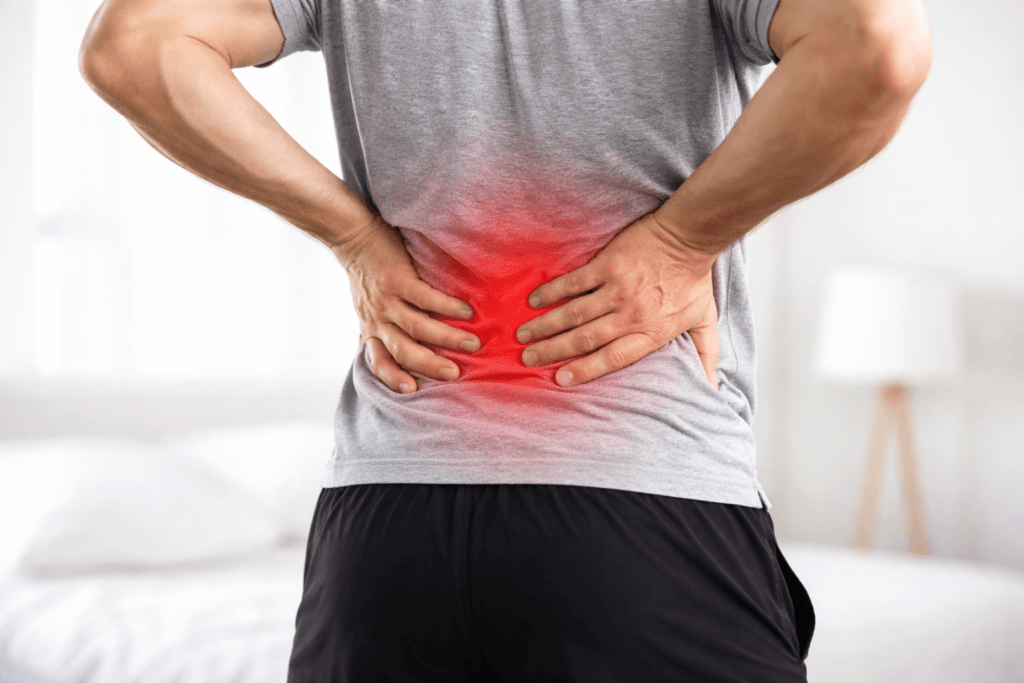
If you’re searching for physical therapy for chronic lower back pain in St. Louis, you’re likely tired of short-term fixes and recurring flare-ups. Chronic back pain changes how you sit, how you move, and how confident you feel performing simple daily tasks. At RPI, we regularly treat patients who have been dealing with lumbar pain for months or even years before deciding to pursue structured rehabilitation. Chronic does not mean permanent. With the right plan, most cases respond extremely well to conservative care.
What “Chronic” Lower Back Pain Really Means
Chronic lower back pain is typically defined as pain lasting longer than three months. However, clinically it represents more than just duration. Over time, the body adapts to pain through muscle guarding, joint stiffness, altered movement patterns, and reduced endurance. The nervous system can become more sensitive, meaning normal activities feel threatening or painful.
Most chronic low back pain is mechanical in nature. That means symptoms change with movement or position. When pain is mechanical, it is highly responsive to targeted physical therapy. Instead of focusing solely on imaging findings, we focus on movement capacity, load tolerance, and muscular coordination.
According to the American Physical Therapy Association, conservative rehabilitation is one of the most effective long-term interventions for persistent low back pain.
Understanding that pain is often driven by movement dysfunction—not structural damage—changes everything about the treatment approach.
Why Pain Persists Even When Imaging Looks Normal
Many patients come to RPI after being told their MRI shows “mild degeneration” or “nothing significant.” Yet they still experience daily pain. Imaging does not always correlate with symptoms. Research consistently shows that many people without pain have disc bulges or degeneration, while others with pain show minimal structural findings.
Persistent pain is frequently related to:
Poor trunk endurance
Hip stiffness limiting proper load distribution
Weak gluteal musculature
Reduced spinal mobility
Fear-based movement avoidance
When the body stops distributing force properly, one region absorbs excessive stress. In many cases, the lumbar spine compensates for hips or thoracic spine limitations.
The goal of physical therapy is to correct these contributors rather than chase a single diagnosis label.
The RPI Evaluation Process
Effective treatment begins with a comprehensive evaluation. At RPI, we assess how you move, not just where it hurts. We examine:
Lumbar mobility
Hip range of motion
Core activation strategies
Trunk endurance
Movement patterns such as hinge, squat, and rotation
Symptom behavior during repeated motions
This evaluation helps us determine the primary drivers of your symptoms. Sometimes mobility is the limiting factor. Other times, stability and endurance are the missing pieces.
For patients dealing specifically with spine-related pain, our back and spine treatment approach outlines the conditions we commonly manage:The evaluation sets the stage for a structured and
individualized plan.
Manual Therapy as a Strategic Tool
Manual therapy can play a valuable role in reducing stiffness and restoring joint motion. At RPI, we use it to improve segmental mobility, decrease protective muscle guarding, and create a window where active exercise becomes more effective.
However, manual therapy is never the entire solution. It supports movement retraining. Once motion improves, we immediately reinforce it with stability and strengthening work.
You can review how we integrate hands-on techniques within our treatment model here:
When paired with exercise progression, manual therapy helps accelerate recovery.
Core Stability for Long-Term Relief
Core stability is frequently misunderstood. It does not mean endless abdominal crunches. In chronic low back pain, the issue is often poor coordination and endurance of deep stabilizers rather than raw strength.
We focus on:
Transverse abdominis activation
Multifidus engagement
Proper breathing mechanics
Controlled trunk positioning
Endurance under low to moderate loads
Once control improves, we gradually progress to loaded movement patterns. These may include hinge variations, carries, and controlled rotational exercises.
Harvard Health notes that targeted stabilization exercises can significantly reduce chronic low back symptoms when progressed appropriately.
Stability training builds resilience, not just temporary relief.
The Role of Hip Mobility and Glute Strength
In many chronic cases, the lumbar spine compensates for restricted hips. Tight hip flexors and weak gluteal muscles increase lumbar strain during walking, standing, and lifting.
We address:
Hip extension limitations
Reduced internal rotation
Glute weakness
Single-leg stability deficits
When hips function properly, lumbar stress decreases. Patients often notice reduced pain simply from improving glute strength and restoring balanced movement patterns.
For active individuals, our sports rehabilitation approach applies similar biomechanical principles:
Optimizing hip mechanics is often the missing piece in chronic lumbar pain.
Dry Needling and Muscle Guarding
Some patients experience persistent muscular tension that limits progress. In appropriate cases, we integrate trigger point dry needling to reduce spasm and improve tissue tolerance.
Dry needling is not a stand-alone solution. It supports active rehabilitation by decreasing guarding and allowing better muscle activation.
Learn more about dry needling:
When muscle tone normalizes, patients are better able to retrain movement patterns effectively.
Progressive Loading and Capacity Building
A major difference between short-term relief and long-term recovery is progressive loading. Chronic pain often develops when the body’s capacity falls below daily demands.
We gradually increase:
Trunk endurance
Load tolerance
Functional strength
Movement complexity
The American Academy of Orthopedic Surgeons emphasizes conditioning programs that strengthen supporting musculature around the spine.
When strength and endurance increase, daily tasks feel easier and flare-ups become less frequent.
Common Mistakes That Prolong Back Pain
Certain patterns repeatedly delay recovery:
Avoiding movement entirely
Relying only on passive treatments
Performing aggressive stretching without stabilization
Jumping back into high-load activity too quickly
Inconsistent exercise routines
Chronic pain improves with consistency and progression. Avoidance reinforces sensitivity, while graded exposure restores confidence.
When to Seek Physical Therapy in St. Louis
If your pain has lasted more than three months, returns repeatedly, or limits daily function, evaluation is appropriate. Early structured care prevents further deconditioning and reduces long-term recurrence risk.
If you want a deeper look at how targeted care can address persistent lumbar symptoms, this RPI article explains our spine-focused philosophy.
Most chronic low back pain cases respond extremely well to conservative care when properly structured.
The Long-Term Outlook
Chronic lower back pain can feel discouraging, but prognosis is often excellent with individualized rehabilitation. The goal is not just symptom reduction. The goal is resilience.
When strength improves, mobility normalizes, and fear decreases, patients regain control of their movement and daily lives.
If you are looking for physical therapy for chronic lower back pain in St. Louis, RPI provides a structured, evidence-based path forward.
If chronic lumbar pain is limiting your work, workouts, or daily routine, contact RPI today to schedule a comprehensive evaluation. Let’s build a plan that restores movement and keeps you active long term.